

Rates Are Up. Your Next Move Can Still Be a Step Forward...
Interest rates have risen, but that doesn’t have to put your plans on hold. For buyers, sellers and landlords, the right next step starts with understanding your own position. Discover what a 4% base rate means for your mortgage, how to assess the whole cost of a move and why focusing on what you can control can help you move ahead with confidence.
The Bank of England has raised its base interest rate from 3.75% to 4.00%, marking its first increase in more than three years.
For anyone planning to buy or sell a home, a rise in interest rates can understandably raise questions. Will your mortgage cost more? Will buyers become more cautious? Should you put your plans on hold?mHigher borrowing costs deserve careful consideration. But a change in the base rate does not, by itself, decide whether moving home makes sense for you.
At Cope & Co., our advice is to focus on what you can influence: your budget, your preparation, your pricing and the overall cost of getting where you want to be.

What the rise means for your mortgage
Mortgage lenders had already been adjusting their prices ahead of the decision. According to MoneyfactsCompare, the Moneyfacts Average New Mortgage Rate reached 5.89%, up from 5.83% at the start of October, its highest level in three years. That's a market average across available products. Your own quote will depend on factors including your deposit, circumstances and the mortgage you choose.
New fixed mortgage prices reflect expectations about future interest rates as well as lenders’ funding costs and competition. An anticipated rise can therefore be reflected in pricing before the Bank announces it. Today's decision does not automatically add another 0.25% to every new mortgage quote.
For existing borrowers, the effect depends on the deal:
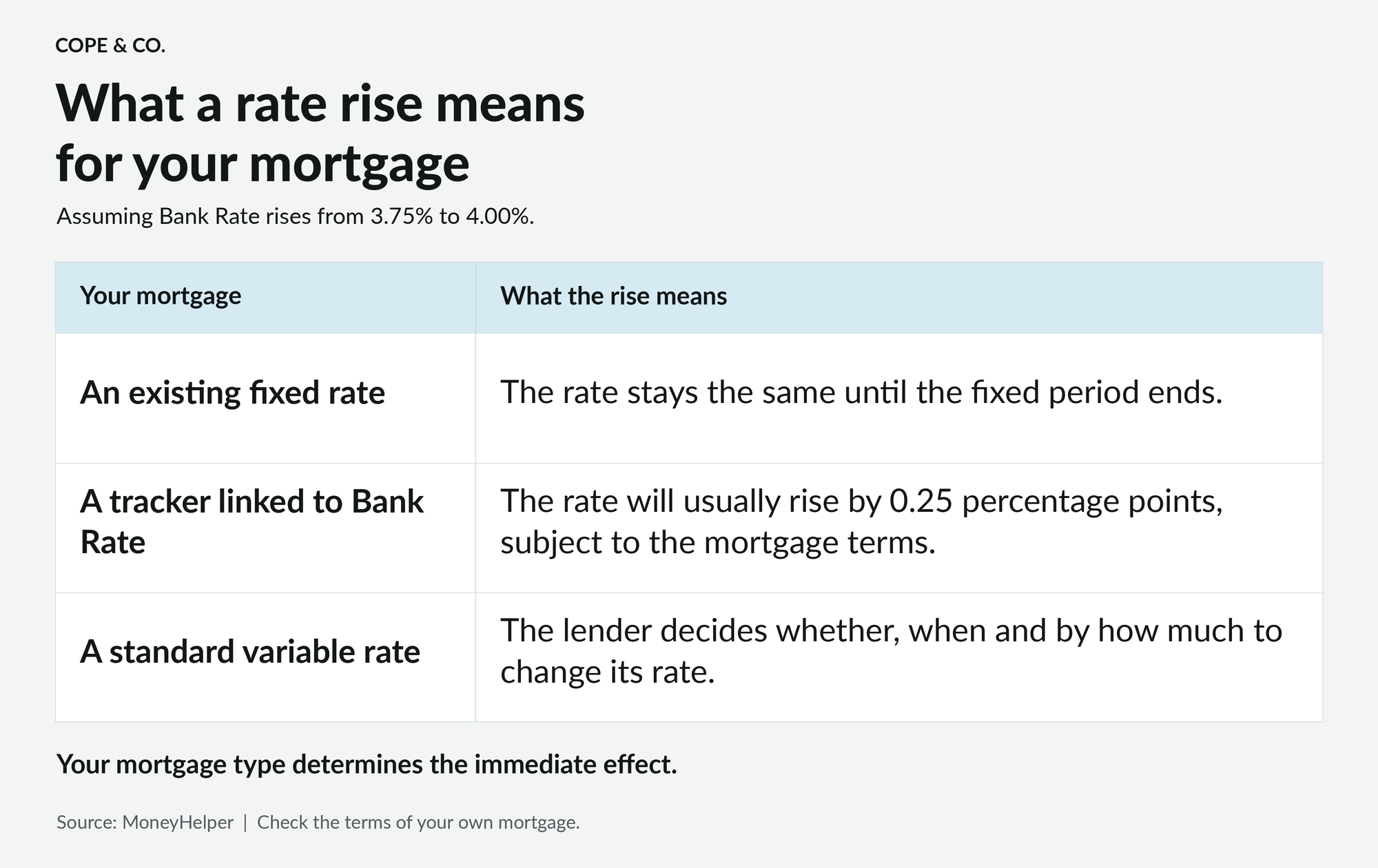
To put the change into pounds and pence, a £250,000 repayment mortgage over 25 years would cost approximately £1,461 a month at 5.00%, compared with £1,498 at 5.25%. That is around £37 more each month, excluding fees.
This illustration assumes the mortgage rate itself rises by 0.25%. Someone coming off a much cheaper fixed deal could face a substantially bigger change, so checking your own figures matters.

Buyers can start with a budget they trust
The most useful first step is to get an up-to-date mortgage assessment. A borrowing estimate from earlier in the year may no longer reflect the deals available or the payment you would feel comfortable making.
Set a comfortable monthly budget. Allow for household bills, maintenance and some breathing room alongside the mortgage. Ask your adviser to show what a higher rate at a future renewal would mean, and compare fees as well as the initial interest rate.
Make your buying position clear. Have your deposit evidence ready, update your agreement in principle and understand your timescale. An agreement in principle is not a final mortgage offer, but preparation helps you make an informed offer and gives a seller a clearer picture of your position.
If some buyers pause their searches, there may be opportunities to negotiate with sellers who are ready to move. That will vary by property and location. A well-prepared buyer with realistic expectations can still make a compelling offer.
Give waiting a fair assessment too. Waiting may help you build a larger deposit or strengthen your finances. It may also mean paying more rent or spending longer in a home that no longer meets your needs. Compare those costs with the options available today, without assuming future mortgage rates or house prices will move in your favour.
If the figures leave you stretched, adjusting your budget or timescale is sensible. If they work comfortably and the right home comes along, there can still be good reasons to move.

Sellers can focus on value and the whole move
Higher borrowing costs can narrow some buyers’ budgets. For sellers, that makes a clear understanding of the competition especially useful.
Look at the homes a buyer could choose instead of yours. How do their asking prices, condition, location and presentation compare? Then review recent comparable sales alongside current enquiries, viewing feedback and offers. Completed sales provide evidence, while live activity helps show how buyers are responding now.
That gives you a sound basis for setting a price and deciding whether it needs adjusting.
Make it easy for buyers to see the value. Good photographs, thoughtful presentation and clear property information help people understand what their money buys. Have your paperwork ready and choose a solicitor early so you can respond promptly once a buyer is found.
When weighing up offers, consider the buyer’s funding, chain and timescale alongside the price. A slightly lower offer from someone well placed to proceed may suit your plans better than a higher offer with greater uncertainty.
If you are buying as well as selling, assess both transactions together. Consider this illustration:
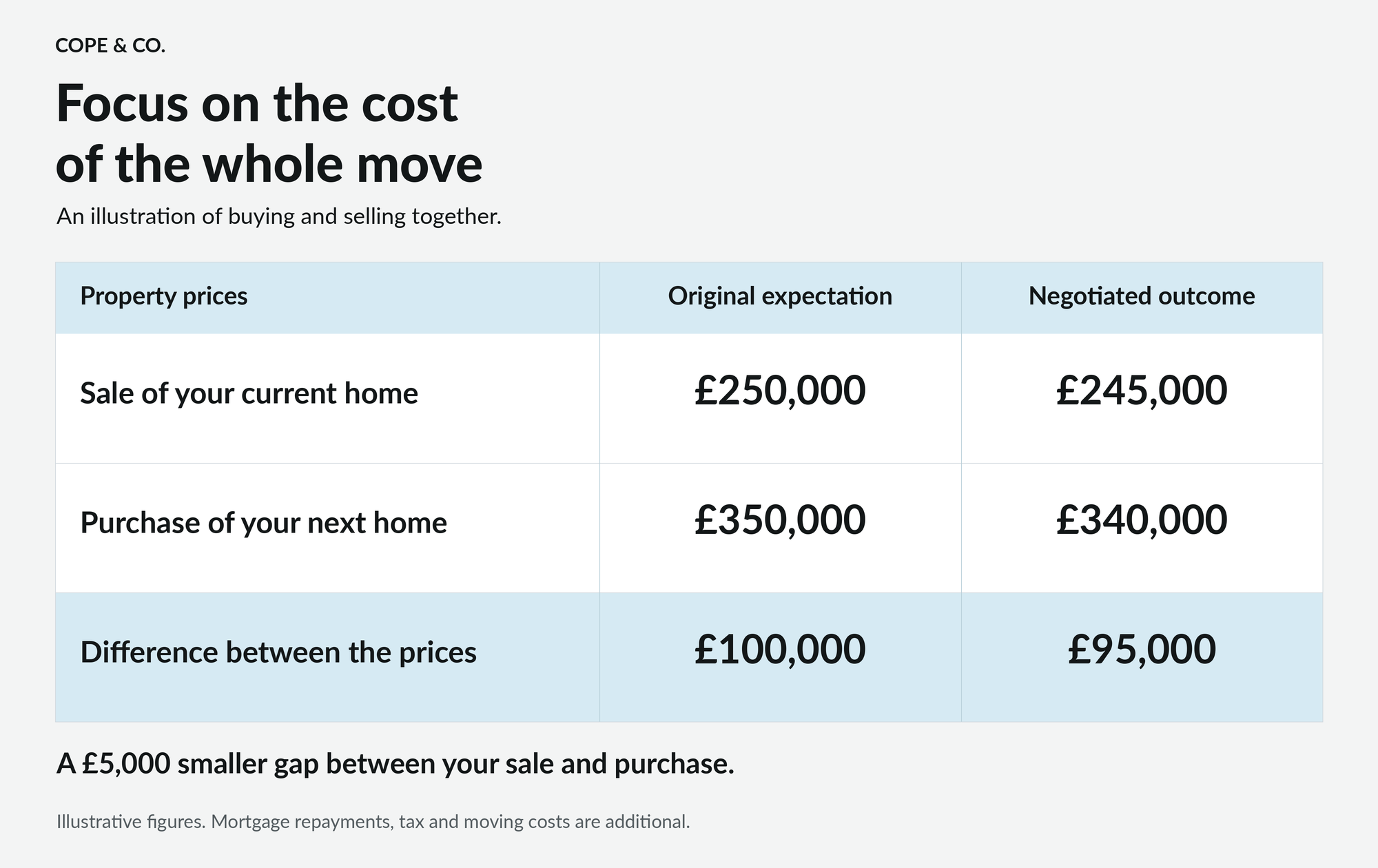
You receive £5,000 less for your current home, but pay £10,000 less for the next one. The difference between the two prices has reduced by £5,000 and you're actually better off!
These are illustrative negotiated figures, not a forecast. You would still need to calculate mortgage repayments, tax and moving costs separately. But they show why the success of your move depends on more than your sale price alone.

Landlords should review borrowing and cash flow
For landlords, the immediate effect also depends on the mortgage. Existing fixed rates remain unchanged during their fixed period, while Bank Rate trackers will generally rise under their terms. New buy-to-let fixes may already reflect expectations of higher rates.
On a £200,000 interest-only mortgage, a 0.25% increase in the actual mortgage rate adds approximately £41.67 a month, or £500 a year.
Refinancing needs attention too. Buy-to-let lenders assess how comfortably rent covers interest, often using a stress rate. Higher assessed interest costs can reduce the borrowing available for the same rent; criteria vary by lender and product.
Review renewal dates early with a specialist broker and compare total product costs. Assess each property’s cash flow after finance, maintenance, management, insurance and tax, with a reserve for repairs and periods without rent.
Keeping a good tenant and dealing with maintenance promptly remain practical ways to protect performance. Any rent review should reflect the local market and applicable rules; higher mortgage costs alone do not determine what a tenant can afford.

Make your next move with clear information
A rate announcement changes one part of the calculation. Your reasons for moving, the equity you hold, your income and the home you want are still relevant to your whole move package.
You can get your borrowing checked. You can prepare your property well. You can negotiate with the whole move in mind. And you can make a decision based on your circumstances.
If you are thinking of buying or selling in Derby, Alfreton or the surrounding areas, talk to us. We can help you understand your property’s position in the local market, assess your options and plan the next steps with confidence.